
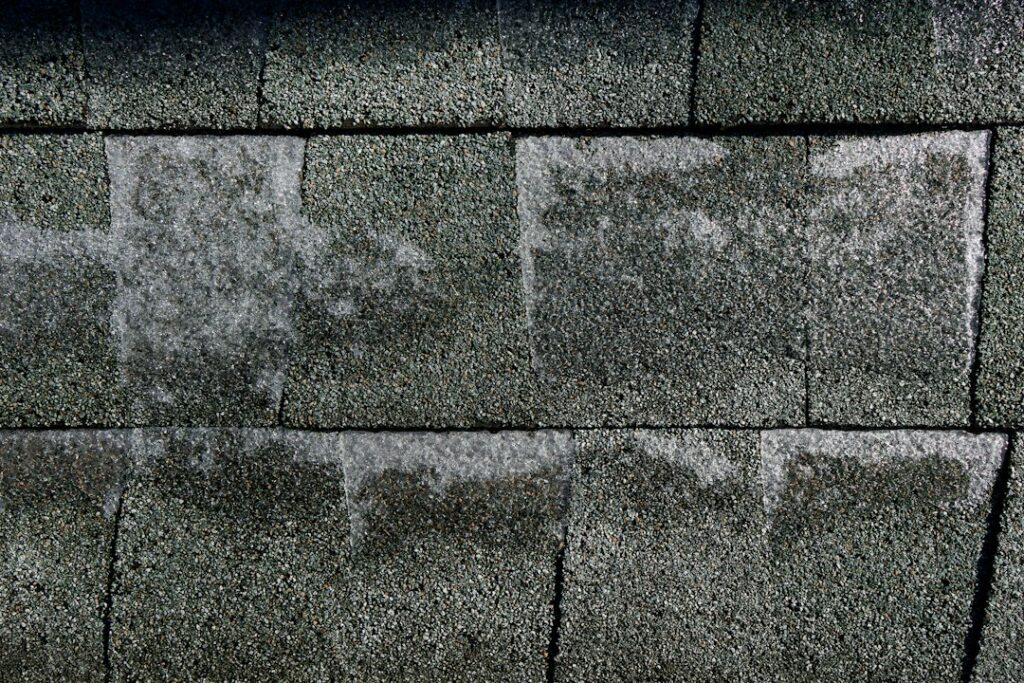
Hail damage is not always dramatic. A roof may still look intact from the ground while hail has cracked shingles, removed protective granules, dented metal components, or weakened flashing. Learning what to look for can help Lockport, NY homeowners decide whether a roof needs closer inspection after a severe thunderstorm.
What does hail damage on a roof look like?
Hail damage commonly appears as small dents, dark spots, exposed matting, or areas where the surface granules have been knocked away. The marks may be scattered rather than arranged in a perfectly even pattern.
On asphalt shingles, look for:
- Circular or irregular bruised areas
- Missing granules that expose the darker material underneath
- Cracks or splits in the shingle surface
- Soft spots that feel less firm than surrounding areas
- Shingles that are lifted, loosened, or broken
- Exposed fiberglass matting beneath the protective coating
Fresh damage may be easier to identify because the affected areas often look darker and sharper than normal weathering. Older hail damage may become less obvious as dirt, moss, or general aging changes the appearance of the roof.
A single mark does not always prove that hail caused the damage. The size, pattern, age, and location of the marks all matter.
Where should homeowners look first?
The most useful areas to inspect are the roof slopes, metal components, and ground around the house. Damage is often easier to spot on softer or thinner materials than on the shingles themselves.
From the ground, check for:
- Shingle pieces or unusually large amounts of granules in gutters and downspouts
- Dents in aluminum siding, window trim, or exterior vents
- Damaged screens, skylight covers, or painted surfaces
- Cracked plastic fixtures
- Fresh marks on cars, sheds, fences, or other exposed property
Metal roof features can provide important clues. Examine gutters, downspouts, drip edges, flashing, vents, and chimney caps for small dents or dimples. If several exposed metal surfaces show fresh impact marks after the same storm, the roof deserves a closer look.
Do not assume that an undamaged gutter means the shingles are undamaged. Hail can strike roof slopes at an angle and affect one material more visibly than another.
Can hail damage be seen from the ground?
Some damage can be seen from the ground, but important shingle damage often cannot. Hail marks may be located on higher roof sections, behind ridges, near valleys, or on slopes that are difficult to view from the yard.
Binoculars can help with a preliminary check. Look for:
- Uneven patches of missing granules
- Dark impact marks
- Broken edges
- Shingles that appear raised or displaced
- Areas that look noticeably different from nearby sections
Ground-level inspection is limited, especially on steep roofs, roofs with multiple levels, or homes surrounded by trees. Walking on shingles can also cause damage, particularly when the roof is cold, aged, wet, or brittle. A ladder should not be placed against gutters or unstable surfaces.
If the roof is steep, slippery, visibly damaged, or difficult to access safely, inspection from the ground is the appropriate stopping point.
How is hail damage different from normal roof aging?
Normal aging usually produces gradual, widespread wear. Hail damage is more often localized and impact-related.
Weathered shingles may show:
- General loss of granules across broad areas
- Faded or uneven color from sun exposure
- Curling along many shingle edges
- Brittle surfaces
- Algae or moss growth
- Cracking caused by long-term expansion and contraction

Hail damage tends to create distinct depressions, bruises, or missing patches within otherwise similar shingles. It may appear more heavily on one roof slope depending on the direction of the storm.
Lockport’s seasonal weather creates several conditions that can complicate identification. Freeze-thaw cycles, snow and ice, wind, summer sunlight, and moisture can all age roofing materials over time. A roof that already has brittle or weakened shingles may show a combination of storm damage and ordinary deterioration.
Does every hailstorm damage a roof?
No. Hail size, wind speed, roof age, shingle condition, impact angle, and the duration of the storm all affect the outcome.
Small hail may leave no visible roof damage, while larger hail can bruise shingles or damage vents and flashing. Wind can also increase the force of impact and may loosen shingles independently of the hail.
The absence of indoor leaks does not rule out roof damage. Many hail impacts affect the outer shingle surface without creating an immediate opening into the attic or living space. Problems may become visible later when rain, melting snow, or repeated freeze-thaw cycles reach weakened areas.
What should be checked inside the home?
After a significant hailstorm, inspect the attic and upper floors for signs that water may be entering. Look for:
- Damp insulation
- Water stains on rafters or roof decking
- Discolored ceilings or walls
- Musty odors
- Drips around skylights, chimneys, or vent openings
- Daylight visible through the roof sheathing
A leak may not appear directly beneath the damaged shingle. Water can travel along roof decking, rafters, insulation, or interior framing before becoming visible.
If water is actively entering the home, place a container beneath the leak if it is safe to do so and move furniture or electronics away from the area. Avoid climbing into a wet attic near electrical wiring.
What should homeowners do after finding possible damage?
Document the condition before making changes. Take wide photographs showing the roof area and closer photographs of individual marks, damaged metal, fallen debris, and interior staining. Note the approximate date of the storm and whether hail, strong wind, or heavy rain occurred.
Temporary measures may be appropriate if there is active leaking, such as placing a tarp from a safe location. Do not climb onto the roof during rain, wind, or icy conditions.
Review the property insurance policy for information about hail coverage, deductibles, deadlines, and whether roof payments are based on replacement cost or actual cash value. Policies differ, and a roof’s age and prior condition may affect how a claim is handled.
A qualified roof inspector may be needed when damage cannot be safely or accurately evaluated from the ground. The inspection should distinguish storm impact from normal aging, previous repairs, manufacturing defects, and damage caused by foot traffic.
Are bruised shingles always visible?
No. Some hail impacts compress the shingle beneath the surface without leaving a clear hole or crack. A bruised area may feel softer than the surrounding shingle, but pressing on roofing materials can cause additional damage and is not a reliable test for an untrained person.
Hail damage may also be hidden beneath overlapping shingles, beneath debris, or on roof sections that are not visible from the yard. A roof can therefore have legitimate storm damage even when the marks are subtle.
The most reliable assessment considers the entire roof system: shingles, underlayment exposure, flashing, vents, valleys, gutters, and signs of moisture inside the home. Recognizing these details helps residents separate ordinary roof aging from damage that may have followed a specific storm.
