

Roof debris is more than a cosmetic problem. Leaves, twigs, pine needles, moss, and windblown material can hold moisture against roofing components, block drainage, hide damaged shingles, and add unnecessary weight. For homeowners in Lockport, NY, seasonal debris removal is especially useful after autumn leaf fall, winter storms, and periods of heavy wind.
The safest approach depends on the roof’s height, slope, surface condition, and the type of debris present. Light debris on a low-slope roof may be manageable from a secure position, while steep, wet, icy, or elevated roofs should not be treated as a do-it-yourself task.
What debris should be removed from a roof?
Leaves, small branches, pine needles, seed pods, and accumulated organic material should generally be removed before they become compacted and wet. Debris is most likely to cause trouble when it collects in valleys, behind chimneys, around skylights, or near roof penetrations.
Watch for these common materials:
- Wet leaf piles that stay in place after rainfall
- Branches with sharp ends or enough weight to damage shingles
- Pine needles packed into valleys or drainage areas
- Moss or organic buildup that keeps roofing materials damp
- Animal nesting material, droppings, or visibly contaminated debris
- Ice-covered debris that cannot be removed without damaging the roof
A few scattered leaves are usually not an emergency. The concern is continued moisture retention, blocked water flow, or debris that may conceal a roof defect.
How can light debris be removed safely?
Light debris can often be cleared with a roof rake or soft-bristled tool used from the ground. A roof rake with a long handle allows a person to pull leaves toward the roof edge without walking on the roofing surface.
Use a gentle technique:
1. Stand on level, stable ground.
2. Keep the tool away from overhead electrical lines.
3. Pull debris down the slope rather than pushing it uphill.
4. Use light strokes to avoid scraping granules from asphalt shingles.
5. Keep clear of the area below the roof edge.
6. Remove fallen material from walkways, plantings, and drainage areas afterward.
Do not use a metal rake, shovel, pressure washer, or stiff brush on asphalt shingles. These tools can remove protective granules, loosen flashing, bend gutters, or create openings where water can enter.
For a low-slope roof that is easily reached from a properly positioned ladder, a soft broom may be suitable. The broom should be used carefully and only when the roof surface is dry and stable.
Is it safe to walk on the roof?
Walking on a roof is not automatically safe, even when the surface looks dry. Asphalt shingles can become slippery from moisture, frost, algae, or fine granules. Older shingles may crack under foot pressure, while newer shingles can lose surface granules if they are scuffed.
Avoid walking on a roof when:
- The surface is wet, icy, frosted, or snow-covered
- The roof is steep or has multiple levels
- Debris makes the walking surface difficult to see
- There are loose shingles, exposed underlayment, or sagging areas
- The roof has fragile materials such as slate, wood shakes, or aging coatings
- Wind conditions could affect balance or ladder stability
A ladder also introduces risks. It must rest on firm, level ground and extend high enough to provide a stable handhold at the roof edge. Gutters should never be used as ladder supports. If reaching the roof requires stretching, standing on the top rungs, or stepping across an unsafe gap, the task has exceeded a reasonable household maintenance job.
How should branches and larger debris be handled?
Small, loose branches can sometimes be removed from the ground with a roof rake. Larger branches should not be dragged across shingles because their weight and rough surfaces can tear or scrape the roof covering.
If a branch is lodged under shingles, caught in a gutter, resting near a chimney, or touching a utility line, leave it in place until the hazard can be addressed safely. Do not cut a branch while standing on the roof or pull on a limb that may shift suddenly.
After a major windstorm, inspect the ground around the home first. Shingles, flashing, siding, and gutter sections found below the roof may indicate damage that is not visible from the yard. Removing evidence before examining the area can make it harder to understand what happened.
What is the right way to clear roof valleys and gutters?
Roof valleys concentrate water, so debris in these areas deserves attention. However, valleys can also be steep and difficult to reach. If clearing them requires climbing onto the roof, use extra caution and avoid scraping tools.
Gutters should be cleared separately from the roof surface. Leaves pulled from the roof may collect in the gutters and downspouts, causing overflow during rain. After debris removal:
- Check whether water can move freely through each downspout.
- Look for sagging gutter sections or separated joints.
- Confirm that downspout outlets discharge away from the foundation.
- Remove piles of leaves from the ground so they do not wash back into the drainage system.
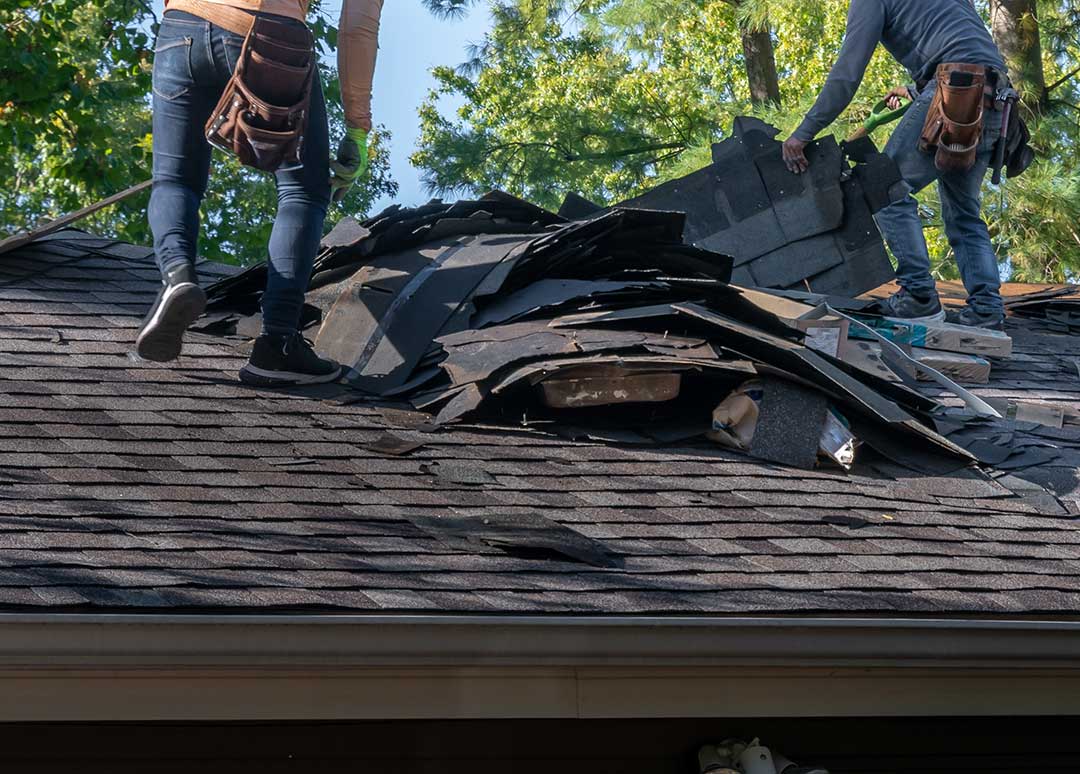
Do not direct roof debris into a storm drain, roadway, or neighboring property. Local drainage systems can become blocked by loose leaves and branches, particularly during heavy autumn rainfall.
What should be done with moss and organic buildup?
Moss should not be pulled aggressively from shingles. Its attachment can lift granules or roofing material, especially on older roofs. Moss often grows where shade, moisture, and organic debris remain on the roof for extended periods.
Removing the visible growth without addressing the damp conditions may only provide a temporary improvement. Trim overhanging vegetation where appropriate, keep gutters functioning, and prevent leaf piles from remaining on shaded roof sections. Chemical treatments require careful attention to roof-material compatibility, runoff, nearby plants, and manufacturer instructions.
Pressure washing is not a suitable shortcut for asphalt shingles. The force can damage the surface and drive water beneath roofing components.
When should debris removal stop?
Stop immediately if the roof shows signs of structural or storm-related damage. Warning signs include:
- A sagging roofline or soft area underfoot
- Missing, lifted, cracked, or curled shingles
- Exposed roof deck or underlayment
- Damaged flashing around chimneys, vents, or skylights
- Water stains on ceilings or upper walls
- A gutter pulled away from the fascia
- Branches tangled with electrical wires
- Significant ice, snow, or storm debris
At that point, debris removal may worsen the damage or create a fall hazard. Safety and legal requirements also matter if ladders, elevated work areas, or electrical hazards are involved. Professional assistance is appropriate when the roof cannot be reached and assessed safely from the ground.
How often should a roof be checked for debris?
A practical schedule is to inspect the roofline and drainage areas several times each year: after major storms, during autumn leaf fall, and before periods of heavy winter weather. A ground-level inspection with binoculars can reveal leaf accumulation, blocked valleys, damaged shingles, and gutter problems without requiring roof access.
Homes near mature trees may need more frequent checks than homes with open exposure. In the local climate, freeze-thaw cycles can also turn trapped moisture into a concern by expanding small cracks and stressing aging materials.
The goal is not to make the roof perfectly free of every leaf. It is to prevent persistent wet piles, blocked drainage, hidden damage, and unsafe conditions before they become larger maintenance problems.
